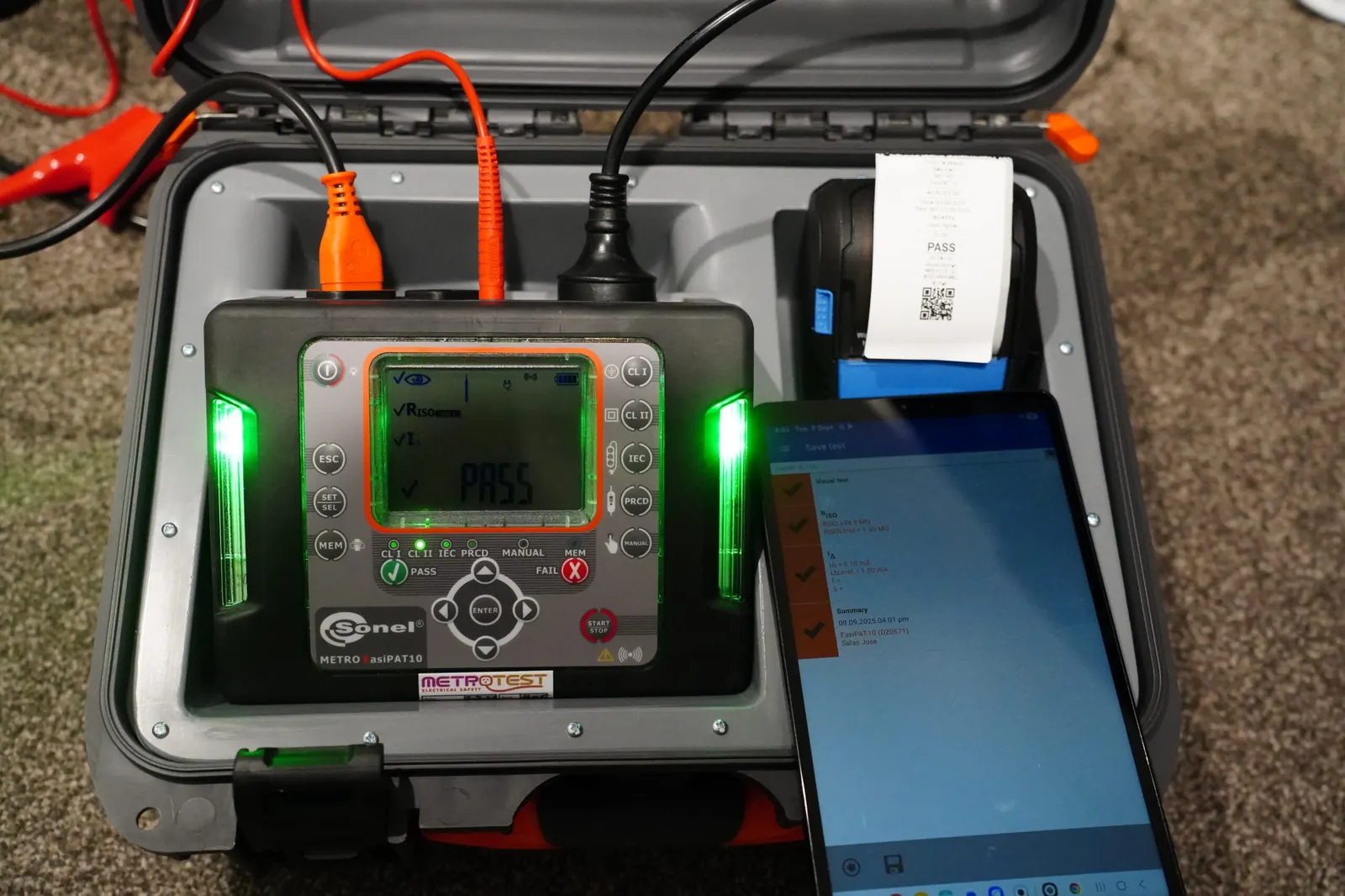
Understanding the cost per item helps businesses budget effectively and choose qualified providers for workplace electrical safety compliance.
Key takeaways
- Test and tag services ensure workplace electrical safety by inspecting, testing, and tagging portable equipment to meet standards such as AS/NZS 3760:2022
- Costs typically range from $3 to $10 per item depending on equipment type, volume, location, and timing
- Choose certified professionals and understand what's included in pricing — tagging, certification, and record keeping
- Flexible options like after-hours services help minimize business disruptions
- Proper documentation and digital log books simplify audits and compliance management
Understanding Test and Tag Services
Ensuring electrical safety in the workplace is essential for protecting employees, avoiding penalties, and maintaining compliance. One key aspect is PAT services — a procedure involving the inspection and testing of portable electrical equipment to confirm it meets safety standards such as AS/NZS 3760:2022.
On-site test and tag services involve professional technicians visiting your business to inspect, test, and tag your electrical equipment. This process ensures appliances are safe to use and reduce electrical accident risks.
The Four-Step Process of PAT
- Visual Inspection
Technicians check for damage, frayed cords, broken plugs, or wear. This step identifies equipment needing repair or replacement before testing. Learn more about this critical step. - Electrical Testing
Using calibrated testers, professionals verify insulation resistance, earth continuity, and polarity to ensure equipment safety. - Tagging
Passed equipment gets a safety tag showing test date, next test due, and pass/fail status—an important visual safety cue. - Documentation and Record Logging
Test results and equipment details are logged for audits and safety management. Read more on record keeping and compliance.
Certification and Qualifications
Testing must be performed by certified professionals qualified under AS/NZS 3760:2022. They issue a valid PAT certificate of compliance confirming regulatory adherence. Learn more about qualifications and standards.
Cost Breakdown: Test and Tag Cost Per Item
Understanding the PAT cost per item helps businesses budget effectively. Prices vary depending on multiple factors.
Factors Influencing Cost Per Item:
- Type of Equipment
Simple cords or tools cost less than complex or high-risk appliances requiring detailed testing. - Volume of Items
Bulk testing of 50+ items often secures discounts. - Location and Accessibility
Hard-to-reach or remote equipment can add travel or mobile service charges. - Timing and Business Hours
Testing outside regular hours may involve premium fees. For insights on after-hours testing benefits and costs, see this resource.
Approximate Price Ranges
Industry data suggests test and tag costs per item typically range between $3 and $10. Small businesses with straightforward equipment should expect prices near the lower end, while complex items may cost more.
Note: Prices are highly variable depending on provider, location, and specifics. Always request detailed quotes outlining tagging, certification, record keeping, and any potential hidden fees.
Evaluating Service Offerings
Selecting the right test and tag provider is crucial. Consider these factors:
- Qualifications and Certification
Ensure testers are certified under AS/NZS 3760:2022 and authorized to issue test and tag certificates of compliance. - Inclusions in Pricing
Confirm what the service covers — tags, records, certificates, travel, and after-hours fees. - Turnaround Time and Scheduling
Flexible, quick service minimizes downtime. Many providers offer after-hours test and tag services to reduce impact. - Reputation and Experience
Choose providers with strong industry track records and positive reviews. - Record-Keeping Systems
Up-to-date test and tag log book templates or digital record solutions simplify audits and compliance. Learn more here and here.
Explore more on certifications and record keeping.
Time Considerations for Test and Tag Services
A common question is, "How long does a test and tag service take?" The answer depends on several variables:
- Number and Complexity of Items — Testing 20 simple devices may take about an hour, while hundreds or complex equipment require longer periods.
- Equipment Accessibility — Hard-to-reach items increase time.
- Bulk Testing Efficiency — Testing many items in one visit improves speed and lowers time per item.
Optimizing Scheduling
Scheduling tests outside normal business hours via after-hours test and tag services can reduce downtime, especially important for 24/7 operations or critical infrastructure.
Documentation and Compliance
Accurate record keeping is essential for compliance with AS/NZS 3760:2022 and effective electrical safety management. Proper documentation:
- Provides proof of compliance
- Tracks upcoming test deadlines
- Records test results and equipment status
What to Include in Your Log Book
- Equipment description and ID
- Date tested and next test due
- Test results (pass/fail)
- Tester's name and certification details
- Any repairs or identified issues
Many providers now offer digital log book solutions for improved accessibility and compliance ease. More information on record management is available here.
After-Hours Test and Tag Services
Testing after business hours helps minimize operational disruptions. Many companies provide flexible scheduling to fit your needs.
When to Use After-Hours Testing
- Manufacturing plants operating 24/7
- Offices seeking to avoid daytime downtime, particularly for office equipment testing
- Events or conferences requiring safety checks without disruption
Cost and Convenience
While after-hours test and tag services often incur premium fees, the convenience and flexibility they offer can provide significant value.
Always discuss scheduling and any additional fees upfront with your provider.
Conclusion
To maintain a safe workplace and meet Australian electrical safety standards, understanding the test and tag cost per item is vital. Consider factors like equipment type, volume, location, and timing when budgeting.
Always obtain detailed quotes specifying included services such as tagging, certification, and record keeping. Verify your testers are qualified under AS/NZS 3760:2022. Flexible options like after-hours test and tag services can help minimize impact on your operations.
Investing time in selecting reputable, experienced providers ensures your workplace remains safe, compliant, and well-organized. Compare providers carefully to find the best fit for your requirements.
Protect your team and meet safety requirements — invest wisely in professional on-site test and tag services today.
Frequently Asked Questions
- What is included in the test and tag cost per item?
The cost typically covers the visual inspection, electrical testing, tagging, and documentation. Additional charges may apply for travel, after-hours work, or complex equipment. - How often should equipment be tested and tagged?
Testing frequency depends on equipment type and environment but generally occurs every 6 or 12 months as per AS/NZS 3760:2022 standards. - Can I perform test and tag myself?
Only certified professionals under AS/NZS 3760:2022 should conduct testing and tagging, as they have the necessary expertise and certification authority. - Are after-hours test and tag services more expensive?
Yes, these services often incur a premium due to scheduling outside normal business hours but can be cost-effective by reducing operational disruption. - Where can I find qualified test and tag service providers?
Look for providers certified under AS/NZS 3760:2022 and with positive industry experience. References and reviews help ensure quality.