Test and Tag is the systematic process of visually inspecting and electrically testing portable electrical equipment to keep New Zealand workplaces safe and compliant.
Key takeaways
- Test and Tag combines a visual inspection with an electrical test using a Portable Appliance Tester (PAT), then a tag recording the test date, retest date and tester.
- In New Zealand it is the practical, industry-standard way for a PCBU to meet its due diligence duties under the Health and Safety at Work Act 2015 (HSWA).
- The process is governed by AS/NZS 3760:2022, with AS/NZS 3012 applying to construction and demolition sites.
- Retest frequency depends on the environment and equipment type, ranging from 3 months on high-risk sites to up to 5 years in low-risk offices.
- A competent person — a registered electrician or someone who has completed Test and Tag training — can carry out the process in-house or through a specialised provider.

What is Test and Tag?
Test and Tag is the common term for a process of systematically checking electrical equipment for safety. It involves two main parts: a visual inspection and an electrical test using a Portable Appliance Tester (PAT). If the appliance passes both, a tag is attached to the lead with details like the test date, retest date, and the person who performed the test.
Key Components of the Process
Record Keeping: Detailed records of all tests—including pass/fail results, repairs, and retests—must be maintained.
Visual Inspection: This is a thorough check for obvious signs of damage, such as frayed cords, cracked casings, bent pins on plugs, or exposed wiring. A majority of electrical faults are identified at this stage.
Electrical Testing: A specialised PAT machine is used to perform tests like:
- Earth continuity (for Class I appliances).
- Insulation resistance.
- Leakage current (in some cases).
Tagging: A durable tag is attached to the flexible supply cord, indicating the appliance's safety status, the date of the test, and the next scheduled test date.
Legislative Foundation and Compliance
In New Zealand, the requirement for electrical equipment safety in a work environment is primarily mandated by the HSWA 2015.
Health and Safety at Work Act 2015 (HSWA)
The HSWA places a primary duty of care on a Person Conducting a Business or Undertaking (PCBU) to ensure, so far as is reasonably practicable, the health and safety of workers and other people affected by the work. This duty extends to the provision and maintenance of safe plant and structures, which includes electrical appliances.
WorkSafe NZ: The national regulator, WorkSafe New Zealand, enforces the HSWA. They provide guidance that supports regular inspection, testing, and maintenance of electrical equipment as a control measure against electrical hazards.
PCBU Responsibility: PCBUs must manage risks associated with using and storing electrical equipment. While the HSWA doesn't explicitly name "Test and Tag," it is the industry-standard and most practical method for demonstrating that a PCBU has met its due diligence to ensure electrical safety.
Relevant Standards
The process of Test and Tag is governed by the joint Australian and New Zealand Standard AS/NZS 3760:2022 (In-service safety inspection and testing of electrical equipment and RCDs).
- AS/NZS 3760: This standard sets out the minimum requirements for the frequency and methodology of testing. It defines different equipment classes (e.g., Class I requiring an Earth Test, Class II being double insulated) and environments (e.g., hostile, non-hostile) to determine the appropriate re-test interval.
- AS/NZS 3012: This standard specifically applies to electrical installations and equipment on construction and demolition sites, which have more frequent testing requirements due to the harsh operating environment.
Scope and Frequency of Testing
The scope of Test and Tag covers nearly all portable, hand-held, and cord-connected electrical equipment used in a workplace, including:
- Residual Current Devices (RCDs), which must also be regularly tested for trip time and operation.
- Power tools (drills, saws).
- Office equipment (computers, printers, monitors).
- Kitchen appliances (kettles, toasters, microwave ovens).
- Extension leads and power boards.
Determining Test Frequency
The required re-test interval is not arbitrary; it depends on the environment the equipment is used in and the type of equipment, as outlined in AS/NZS 3760.
| Environment/Equipment Type | Typical Test Frequency |
| Construction/Demolition Sites (High Risk) | 3 Months |
| Factories/Workshops (Hostile Environment) | 6 Months |
| Cleaning Equipment (Subject to flexing/liquids) | 6 Months |
| Offices/Non-Hostile Environments | 12 Months (or up to 5 years) |
| Hired Equipment | Before initial hire, and visual inspection before re-hire. |
Safety and Risk Mitigation
The most crucial function of Test and Tag is the proactive mitigation of electrical risk.
Preventing Accidents and Injuries
Faulty electrical equipment can lead to:
- Electrocution/Electric Shock: This is the primary hazard. A failed earth connection on a Class I appliance, for example, means a person touching the metal casing could become the path to earth, leading to severe injury or death.
- Fires: Short circuits or overheating caused by damaged insulation, overloaded circuits, or faulty internal components are a common cause of electrically-started fires.
- Burns: Contact with live wires or flashovers from severe faults can cause thermal burns.
Regular testing ensures that critical safety measures, such as earth continuity and insulation integrity, are intact before a failure can result in a catastrophic event.
Protecting Property and Business Continuity
Beyond human safety, Test and Tag protects business assets. A fire caused by faulty equipment can lead to:
- Loss of property and infrastructure.
- Business interruption and loss of revenue.
- Increased insurance premiums.
A diligent Test and Tag program is an investment in operational resilience. Read more
Economic and Legal Implications
Compliance with Test and Tag requirements has significant legal and economic advantages for PCBUs.
Legal Due Diligence
Maintaining a robust, documented Test and Tag regime provides irrefutable evidence of due diligence under the HSWA. If an electrical accident occurs:
- PCBU Defence: Accurate records prove that the PCBU took all reasonably practicable steps to ensure equipment was safe, which is a key legal defence.
- Prosecution: Failure to implement a control measure like Test and Tag, resulting in injury or death, significantly increases the likelihood of a prosecution by WorkSafe NZ, potentially leading to substantial fines and, in severe cases, imprisonment for officers.
Insurance and Liability
Insurance companies often view a documented safety program, including Test and Tag, favourably. In the event of a claim:
Claim Validity: Failure to maintain equipment to standard could potentially jeopardise the validity of an insurance claim related to an electrical fire or accident.
Reduced Liability: Evidence of proactive safety management can reduce the PCBU's perceived liability.
Who Can Perform Test and Tag?
A competent person is someone who has acquired, through training, qualification, experience, or a combination of these, the necessary knowledge and skills to:
- Visually inspect the equipment.
- Correctly use the PAT.
- Interpret the test results (e.g., understanding the Pass/Fail limits).
- Determine the correct re-test intervals.
In New Zealand, while a registered electrician is inherently competent, the standard also allows for individuals who have completed specific Test and Tag training courses to become competent persons. This allows businesses to manage their compliance in-house or use external specialised service providers.
How We Do Test and Tag
Testing an IEC Lead
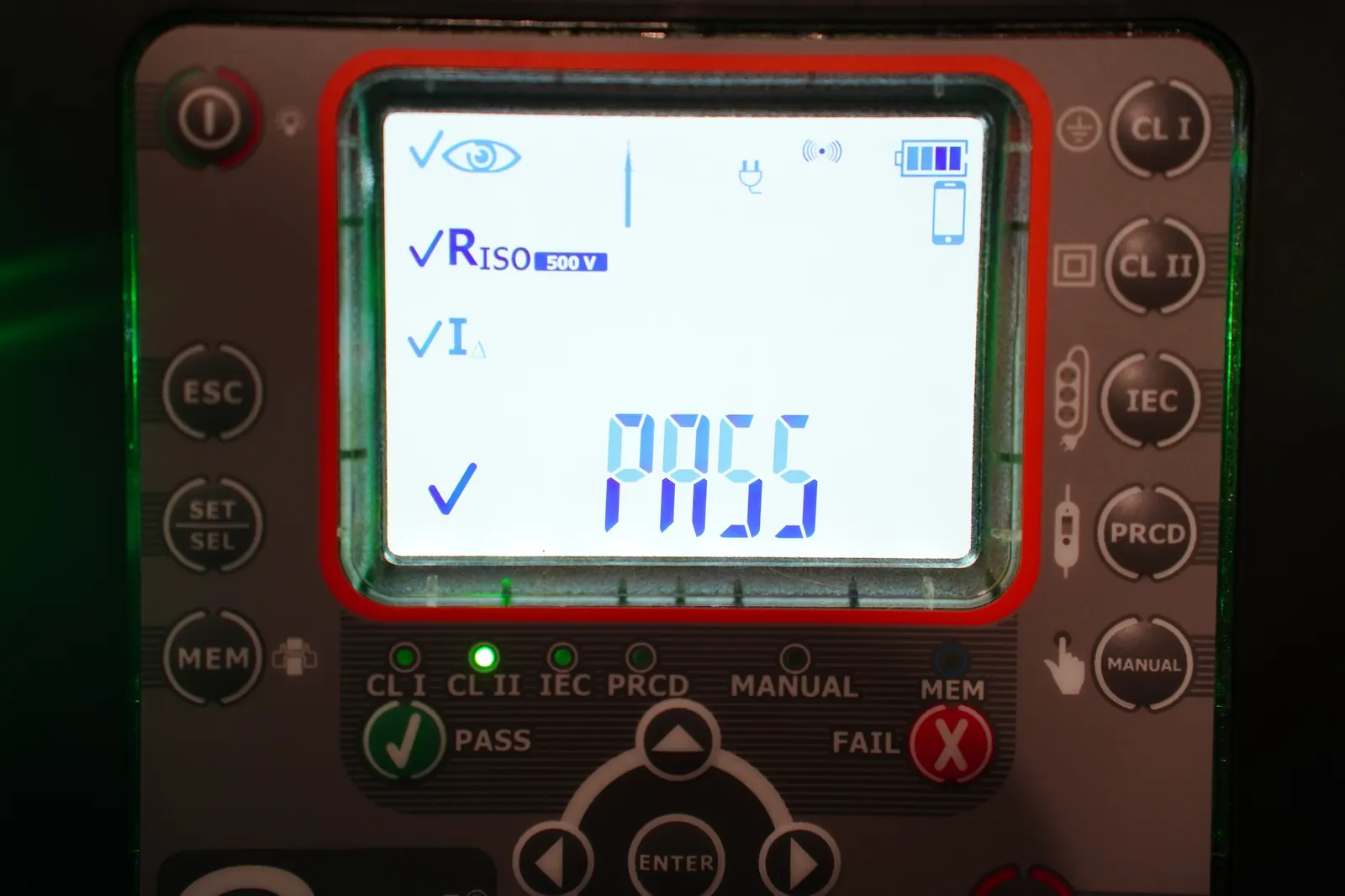
Testing an IEC lead (or "kettle cord") is a mandatory part of Portable Appliance Testing (PAT) under New Zealand's electrical safety requirements. As a critical cord set used with computers and appliances, its integrity is essential for workplace safety and AS/NZS 3760 compliance.
This guide outlines the procedure for a competent person using a PAT tester to ensure the lead is electrically safe.
1. The Crucial Visual Inspection (NZ Safety First)
The formal visual inspection is the first step in Test and Tag and identifies over 90% of faults. A faulty lead must be immediately failed and removed from service.
| Component | Inspection Focus | SEO Keywords |
| Mains Plug (NZ 3-Pin) | Look for cracks, heat damage, bent pins, or signs of impact. Crucially, check the cord grip to ensure the cable is secure and no inner wires are visible. | Electrical safety NZ, Visual inspection, Frayed cord, NZ plug check |
| IEC Connector (C13/C14) | Inspect the plastic body for damage and check for overheating (discolouration) near the pins, which indicates a loose connection. | IEC lead safety, C13 connector check |
| Flexible Cord | Check the entire length for cuts, abrasions, crushing, or knots. Damage to the outer sheath can compromise insulation resistance. | Cord set inspection, Damaged cable |
2. Electrical Testing with a PAT Tester (AS/NZS 3760 Standard)
A modern PAT tester is required to run a dedicated Cord Set or Lead test to confirm the internal wiring safety, meeting the AS/NZS 3760:2022 requirements.
A. PAT Tester Setup
- Select Test Mode: Choose the "Cord Set" or "Lead" test function on your PAT device.
- Connect Both Ends:
- The mains plug (NZ 3-pin end) is connected to the PAT tester's 230V socket.
- The IEC connector is plugged into the dedicated IEC socket on the PAT tester (note: this direct connection is the standard procedure for simple IEC leads).
B. The Three Mandatory Tests for Cord Sets
The PAT machine automatically performs these critical checks:
| Test Name | Purpose & Standard | Pass Criteria | SEO Keywords |
| 1. Earth Continuity Test | Verifies the low-resistance path from the plug's Earth pin through the wire to the Earth contact in the C13 connector. This ensures the fuse will blow if a fault occurs. | Resistance ≤ 0.1 Ω (Ohm). | Earth continuity test, Low resistance test, PAT test earthing |
| 2. Insulation Resistance Test | Measures the integrity of the insulation separating the Active/Neutral wires from the Earth wire. Prevents current leakage and electric shock. | Resistance ≥ 1.0 MΩ (Megaohm). | Insulation resistance, PAT testing NZ, Leakage current |
| 3. Polarity Test | Confirms that the internal Active (Brown) and Neutral (Blue) conductors are not reversed—a critical safety issue that can leave the appliance live even when switched off. | Correct wiring confirmed (Pass). | Polarity check, Wiring fault, PAT compliance |
3. Tagging and Record Keeping (HSWA Due Diligence)
Successfully completing the PAT testing process is proof of due diligence under the Health and Safety at Work Act 2015 (HSWA).
- PASS: Affix a durable Test Tag (Green/Blue/Yellow/Red, depending on the period and frequency) to the lead, near the plug. The tag must include the test date, re-test date, and tester's identity.
- FAIL: Attach a highly visible FAIL tag and immediately withdraw the lead from service.
Regular IEC lead testing is an essential measure for risk mitigation and maintaining a safe working environment in all New Zealand workplaces.