Choosing between a website and social media as your first investment comes down to whether you want owned, long-term control or immediate, platform-dependent reach.
Key takeaways
- Ownership of a site gives you control and long-term SEO value. It is your owned space for content, design, and user experience. Learn more.
- Social media provides immediate reach and engagement, but visibility is platform-dependent and can change with algorithms. Learn more.
- Consider a hybrid approach for a balance of control and reach. Further reading.
Estimated reading time: 6 minutes
Table of contents
- Understanding Website and Social Media Platforms
- Website Defined
- Social Media Platforms Explained
- Key Differences: Functionality and Purpose
- Advantages of Having a Business Website
- Control Over Content and Design
- Professional Image and SEO Benefits
- E-Commerce Capabilities
- Benefits of Using Social Media for Business Marketing
- Immediate Reach and Cost-Effectiveness
- Opportunities for Targeted Advertising
- Factors to Consider When Choosing Between a Website and Social Media
- Align with Business Goals
- Target Audience and Budget Consideration
- Assessing Business Type
- Case Studies/Examples
- Website Emphasis Success
- Social Media for Initial Reach
- Conclusion
- Call to Action
- Frequently Asked Questions
Understanding Website and Social Media Platforms
Website Defined
A page on a site is your business's owned digital space. It is a customizable platform where you have complete control over content, design, and user experience. Common uses of websites include:
- Lead generation
- E-commerce
- Search Engine Optimization (SEO) optimization
- Integration with tools like analytics and booking systems
Learn more about why a web matters for visibility and control.
Websites act as a stable, long-term investment in your online visibility and control, offering opportunities to incorporate features unique to your business model. Read more.
Social Media Platforms Explained
Social media platforms such as Instagram, Facebook, and LinkedIn are spaces for storytelling and community building. They help businesses:
- Reach audiences immediately
- Build brand personality
- Facilitate direct interactions
However, these platforms rely on algorithms for visibility, and your presence is more transient and platform-dependent.
Understanding that the two channels serve different purposes helps you plan a balanced strategy.
Key Differences: Functionality and Purpose
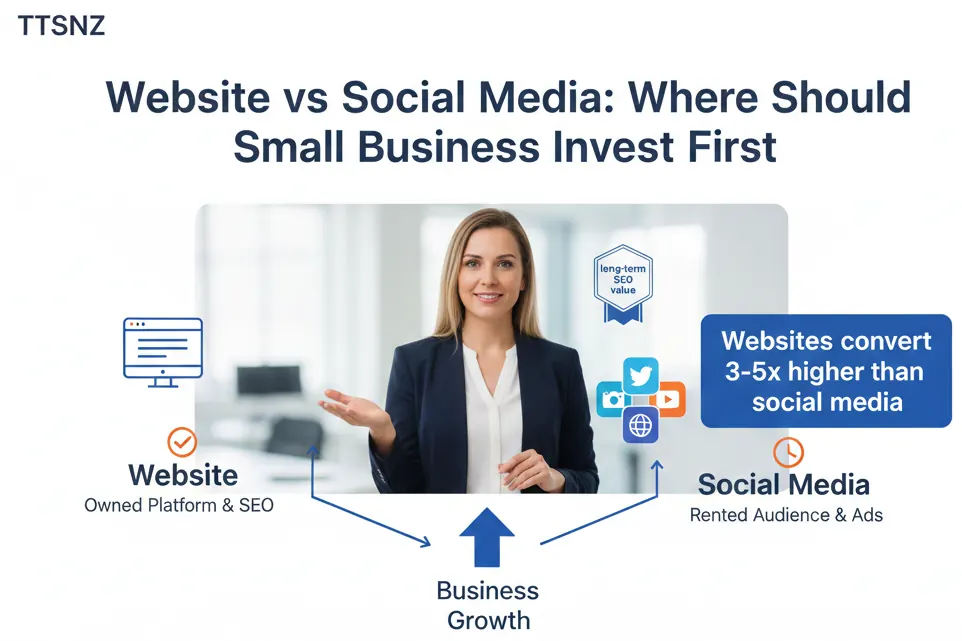
- Website: Offers permanent ownership and long-term SEO value. It serves as a lasting foundation for content and audience engagement.
- Social Media: Provides short-term reach and is excellent for immediate audience interaction, though its effectiveness can fluctuate with algorithm changes.
Advantages of Having a Business Website
Control Over Content and Design
A vital advantage of having a website is control over content and design. This control cannot be matched by social media platforms, where visibility can change unexpectedly.
- Personalize the page's content to fit specific business needs.
- Establish a professional image that enhances conversion rates — web page visitors often convert to leads at much higher rates than social media browsers.
Learn more about how ownership supports credibility and conversions.
Professional Image and SEO Benefits
A page on a site conveys a professional image and credibility, which can lead to higher visitor conversion rates (3-5x higher than social media ads).
- Enjoy SEO benefits, including improved search engine visibility and a steady stream of long-term traffic from evergreen content. Check out more insights.
Learn more about SEO and credibility benefits.
E-Commerce Capabilities
Websites enable e-commerce capabilities with tools like WordPress, offering privacy-compliant sales and analytics management, essential in today's regulatory environment.
Learn more about choosing between custom development and templates.
Benefits of Using Social Media for Business Marketing
Immediate Reach and Cost-Effectiveness
Social media provides immediate reach with low initial costs. Although organic reach is diminishing, targeted advertising offers a potent way to engage with new and existing audiences.
- Low initial costs with gradual ad spending.
- Opportunity for community building and customer interaction, enhancing brand visibility despite lower direct sales conversion.
Opportunities for Targeted Advertising
Utilize social media for targeted advertising and garner audience insights through analytics tools, deepening your understanding of customer demographics and preferences.
Factors to Consider When Choosing Between a Website and Social Media
Align with Business Goals
Determine your business's long-term vs. short-term goals:
- A web page supports long-term growth and sales, fostering consumer trust.
- Social media suits swift brand awareness and engagement.
Target Audience and Budget Consideration
Evaluate your target audience's platform preferences, whether younger generations preferring Instagram or professionals gravitating toward LinkedIn.
- Budget matters. A web page involves higher upfront costs but provides enduring value, while social media relies on continual investment for major reach.
Assessing Business Type
Understand the type of business focus:
- Product-oriented businesses likely benefit from e-commerce features on a robust web page.
- Service-oriented businesses can effectively start with conversations and networking on social media.
Case Studies/Examples
Website Emphasis Success
A B2B consultancy increased leads by reallocating 20-30% of its social media budget to website enhancements and SEO, resulting in a 64% leap in inbound leads. This shows the value of owned assets. Case study source.
Social Media for Initial Reach
Some small businesses initially leverage social media to gain audience attention, then gradually prioritize website SEO for broader and ongoing client engagement.
Conclusion
Websites are the foundational home for small businesses, offering enduring benefits like control, SEO-driven leads, and ROI. Social media can boost engagement as a supportive asset. Customize your strategy by assessing your business type, target audience, budget, and goals to form a hybrid approach.
Call to Action
Assess your business goals and how your audience engages online, then consider consulting with a digital marketing expert for a tailor-made plan. Please share your experiences with social media vs. website marketing for business in the comments to foster learning.
Frequently Asked Questions
- Should I start with a website or social media?
- Can I have both a website and social media?
- How should I allocate budget between the two?
- How long before I see results?
Answer: Start with a clear goal. If your priority is control, SEO, and conversions, invest in a website first. If you need rapid brand visibility, social media can jumpstart awareness while you build your site.
Answer: You can and should pursue both, creating a hybrid strategy: a robust website complemented by social channels that drive traffic to your site.
Answer: Start with a budget plan: allocate more upfront to website development and SEO, then assign ongoing budget for social advertising to sustain reach.
Answer: Results vary, but with consistent content, you may start seeing measurable improvements within 3-6 months.