Test and tag is the process of inspecting electrical equipment for safety, combining a visual check with electrical testing and a durable tag showing the test date and next due date.
Key takeaways
- Safety first — regular testing helps catch faults before they cause harm. Test and Tag practices reduce risk.
- Compliance matters — following standards protects your business from legal issues. AS/NZS 3760 alignment is key.
- Documented tagging — tags show testing dates and next due dates for accountability.
- Broad applicability — all workplaces benefit, from offices to construction sites. PAT testing is widely relevant.
- Better outcomes — proactive testing preserves assets and reduces downtime.
Estimated reading time: 8 minutes
Note: Practical context and sources linked throughout the post provide direct context for readers who want to explore further.
What is Test and Tag?
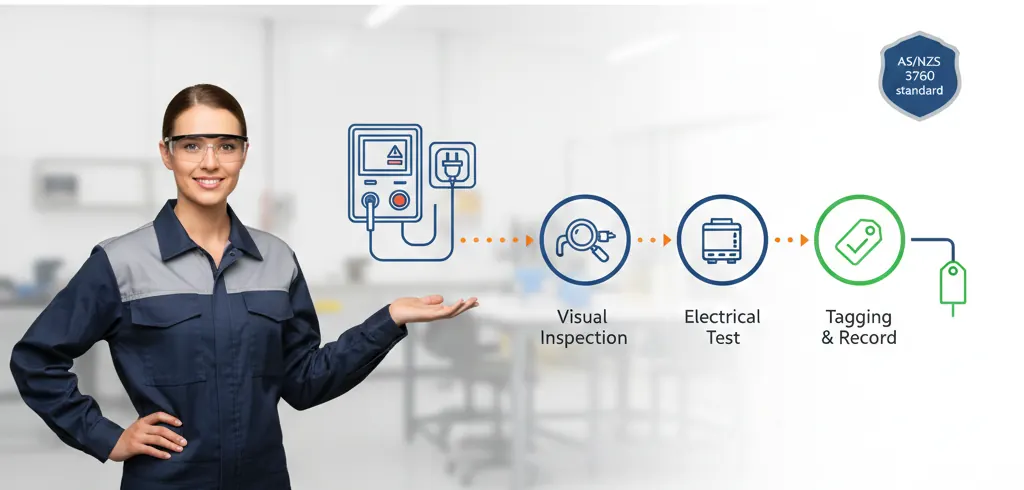
Test and tag refers to the process of inspecting electrical equipment for safety, combining a visual check with electrical testing to confirm safety. The meaning of the phrase centers on identifying hazards and documenting safety for appliances used in workplaces. The standard three-step approach includes:
- Visual Inspection: A trained technician looks for visible damage to cables, connectors, guards, covers, and plugs.
- Electrical Testing: Using a Portable Appliance Tester (PAT), devices are checked for proper function and electrical faults.
- Tagging: A durable tag is affixed with the test date and next due date to indicate safety compliance.
These steps help keep work environments safe, and they sit within a broader safety context that emphasizes visual inspection's critical role.
For practical applications in different settings, see Test and Tag Office Equipment for Workplace Safety and The Indispensable Role of Test and Tag in NZ.
Portable Appliance Testing Explained
Portable appliance testing (PAT testing) is vital to ensure that equipment functions safely. The practice includes:
- Conducting a thorough inspection for visible wear and damage.
- Verifying electrical functionality with specialized equipment.
- Checking safety against relevant standards and documenting results for compliance records.
Although PAT is common in several sectors, the core goal is universal: prevent faults from causing harm. Lack of compliance can lead to legal liability and safety risks. See ETCS resources for construction contexts.
Examples include office equipment safety checks (Test and Tag Office Equipment for Workplace Safety) and hospital equipment safety considerations (Test and Tag in Hospitals: Critical Safety).
Why is Test and Tag Important?
Test and tag is important for several reasons:
- Safety Assurance: Regular testing helps catch faults before harm occurs, reducing accident risk. Electrical safety standards guide these checks.
- Legal Compliance: Following standards protects businesses from legal action and ensures compliance with electrical safety regulations.
- Asset Protection: Early fault detection extends appliance life and limits repair costs.
- Industry-specific importance: In construction and other high-risk sectors, adherence to testing reduces serious hazards. ETCS context.
For a deeper look at the importance of visual inspection, see The Unseen Danger: Visual Inspection.
Electrical Safety Testing in the Workplace
Electrical safety testing protects workers and assets by preventing injuries and equipment damage due to faults. Regular testing reduces risk and ensures adherence to safety regulations. In regulated industries like construction, test and tag is often mandatory to maintain safety records and status. The frequency and methodology typically align with standards such as AS/NZS 3760.
Learn more about the broader NZ perspective here: The Indispensable Role of Test and Tag in NZ.
AS/NZS 3760 Standard Explained
The AS/NZS 3760 standard provides the guideline for electrical safety of appliances — covering test intervals, who can perform tests, and general process guidelines. Following this standard helps ensure safety and regulatory compliance. Relevant sources discuss how to implement these guidelines in practice:
- AS/NZS 3760 guidance on test intervals and responsibilities.
- Practical application in workplaces and industry environments, see The Local Guys Test and Tag.
This standard aligns with broader NZ resources, such as The Indispensable Role of Test and Tag in NZ.
Conclusion
In summary, understanding what is test and tag is vital for workplace safety, compliance, and asset protection. Regular testing and documentation help prevent electrical hazards and demonstrate responsibility. Prioritize skilled testers, maintain detailed records, and follow established standards to create a safe and compliant work environment. For reference, review resources on visual inspection and NZ perspectives linked above.
Call to Action
Ensure appliances are tested by qualified technicians.
Maintain detailed compliance records and schedule regular testing.
Consult the Connex Electrical guide for practical steps, and review the office-focused guidelines.
Frequently Asked Questions
What is test and tag?
It is a safety process combining visual inspection, electrical testing, and tagging to confirm appliance safety.
Who can perform PAT testing?
Qualified technicians are recommended to perform tests and maintain records per AS/NZS 3760 guidelines.
How often should testing occur?
Intervals depend on equipment type and usage; follow standard recommendations and your local regulations.
Where can I learn more?
See the resources linked throughout this post, including Test and Tag Training and NZ-focused guidance at The Indispensable Role of Test and Tag in NZ.