A missed call text back is an automated SMS system that responds instantly to unanswered business calls, helping companies convert potential lost sales into engaged leads.
Key takeaways
- Missed calls cost sales: SMEs miss between 22% and 62% of incoming calls, and 85% of customers who don't connect on the first attempt won't call back.
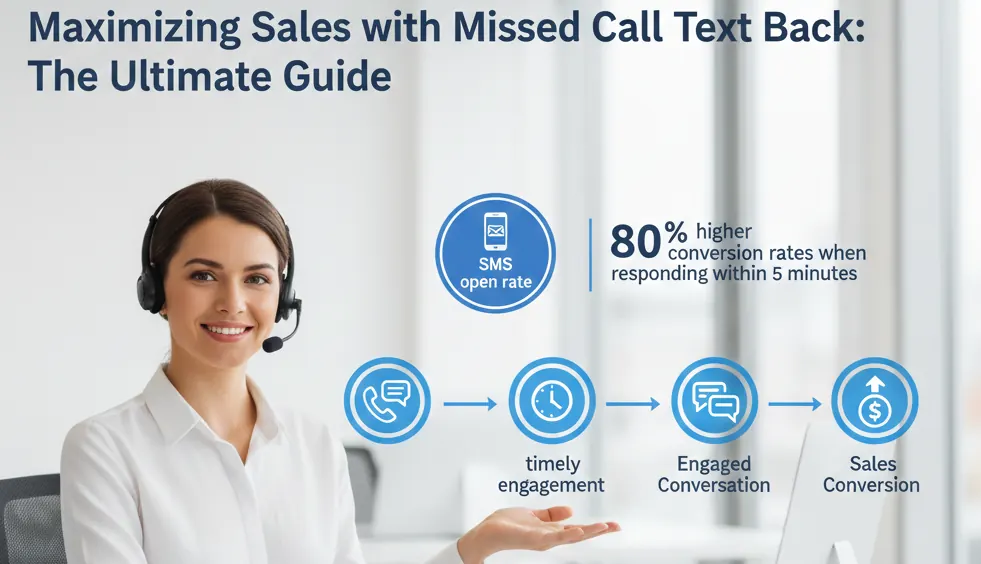
- Speed matters: Responding to a lead within five minutes can boost conversion rates by up to 80%, and businesses contacting leads within one hour are nearly seven times more likely to qualify them.
- Text beats voicemail: Text messages have a 98% open rate compared to voicemails, reflecting a preference for immediate communication.
- The 2-2-2 method: automated text within two minutes, personal follow-up within two hours, reminder within two days.
Introduction
A missed call text back is an automated SMS system designed to handle incoming calls that do not connect. By sending instant responses to these unanswered business calls, companies can convert potential lost sales into engaged leads. This system acknowledges inquiries immediately, allowing businesses to maintain engagement and trust with potential customers. Missed calls are a common challenge for businesses, especially small and medium-sized enterprises (SMEs), which miss between 22% to 62% of incoming calls. These missed opportunities often translate to lost revenue and customer dissatisfaction, as addressing missed calls promptly is crucial. Research shows that businesses contacting leads within one hour are nearly seven times more likely to qualify them compared to those taking longer. Learn more about how automation and lead capture integration can further improve these outcomes here: automation and lead capture integration.
Understanding the Impact of Missed Calls on Sales
Missed calls can lead to significant lost sales opportunities. A staggering 85% of customers who fail to connect on their first attempt won't call back, resulting in UK SMEs losing approximately £90m annually in potential sales. Timely responses are critical. Responding to a lead within five minutes can boost conversion rates by up to 80%. In contrast, delays can drive potential customers to competitors. Moreover, text messages boast a 98% open rate compared to voicemails, reflecting consumers' preference for immediate communication.
For strategies that connect missed calls to captured leads, see Lead Capture Automation.
The Role of Automated Call Back Systems
An automated call back system detects missed calls and triggers immediate follow-ups. This ensures inquiries aren't ignored, thereby retaining leads. The benefits of such systems are extensive, enhancing engagement and ensuring timely contact. Leads approached within five minutes show a much higher likelihood of response compared to over a tenfold likelihood than with delayed callbacks from unknown numbers.
This approach aligns with best practices in lead capture automation, helping bridge missed calls to captured leads.
The Power of Instant SMS Response Automation
Instant SMS response automation works hand-in-hand with call backs by sending immediate, personalized texts such as "Sorry we missed you—how can we help right now?" after a missed call. This kind of proactive communication reassures customers and enhances both satisfaction and loyalty. In competitive markets, acknowledging missed calls swiftly can make a significant difference.
Pairing SMS automation with lead capture automation can provide end-to-end lead handling. See Lead Capture Automation for more details.
Key Features of a Successful Missed Call Text Back Strategy
- Customization Options: Personalize messages with customer names to build relationships and foster trust.
- Integration Capabilities: Compatible with existing systems like CRM for a seamless, data-driven response approach.
- User-Friendly Interface: Simplify the setup process, such as by connecting numbers and defining active service hours.
- AI Integration: Provide nuanced, individualized replies, offering a balance between human touch and automation.
For CRM integration examples, see Lead Capture Automation.
Implementing a Missed Call Response Strategy: Best Practices
To implement a robust missed call response strategy, consider the following steps:
- Connect a Business Number and Set Templates: Create acknowledgment and call-to-action message templates to quickly address missed calls.
- Determine Active Hours and Integrate with Existing Systems: Define service hours and ensure integration with current processes like CRM.
- Test with the 2-2-2 Method: Send an automated text within two minutes of a missed call, follow up personally within two hours, and send a reminder within two days.
Further, optimize your strategy by monitoring response and resolution times, collecting customer feedback, and adjusting satisfaction metrics for ongoing improvement.
For an end-to-end workflow that ties missed calls to captured leads, see Lead Capture Automation.
Case Studies and Success Stories
Real-world examples underline the impact of missed call text back systems:
- An Indian bank increased customer satisfaction and reduced operational costs by using such a system to provide instant account information without long wait times.
- A Southeast Asian e-commerce platform reduced refund rates by 30% by verifying orders through text, thereby increasing trust and loyalty.
For related case studies in lead capture automation, see Lead Capture Automation.
Conclusion
Missed calls are a significant cost factor leading to lost sales, but by implementing a missed call text back system, businesses can turn these missed opportunities into valuable engagements. This allows for swift, automated responses, keeping customer interactions both timely and efficient.
Source: Juice Digital
To explore more about automating inbound lead workflows, see Lead Capture Automation.
Call to Action
Now is the time to explore missed call text back automation to prevent lost sales and drive conversions. Such implementations not only enhance customer satisfaction but also provide a competitive edge in today's fast-paced market.
If you found this guide helpful, you might also want to check out our deeper dive into lead capture automation: https://ttsnz.info/lead-capture-automation-sales-efficiency.
Frequently Asked Questions
What is a missed call text back?
A missed call text back is an automated SMS system that immediately follows a missed call with a message to acknowledge the inquiry and offer next steps or assistance, helping to retain the lead.
How quickly should you respond to missed calls?
Best practice is within two minutes for an automated acknowledgement, followed by a personal follow-up within two hours, and a reminder within two days (the 2-2-2 method).
How can SMS automation integrate with CRM?
SMS automation can push lead data, interaction history, and status updates into your CRM to create a seamless, data-driven follow-up workflow.
What are the best practices for a missed call strategy?
Key practices include: configuring templates, defining active hours, integrating with existing systems, and employing timely multi-step follow-ups (2-2-2).